Immersive Roulette Slow Motion: Any Real Edge?
Slow motion in live dealer roulette is a diagnostic illusion, not a predictive weapon — and anyone telling you otherwise is selling fairy dust. The moment a studio feed drops into slo-mo replay, the physics of the wheel do not change one micron. What changes is your perception latency, and that gap is exactly where amateur players get harvested.
The core mechanic worth dissecting is the relationship between ball velocity decay, rotor speed, and the deflector geometry on a real Immersive Roulette wheel. Every spin follows a deterministic arc until the ball hits the first diamond. After that, chaos theory owns the outcome. Slow motion footage lets you watch that chaos at 120 frames per second, but it does not let you compute it in real time — your brain is still locked at roughly 200 milliseconds of visual processing lag.
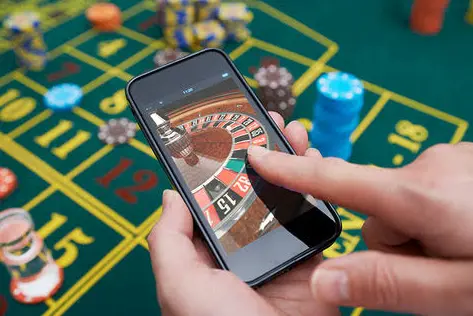
The Frame-Rate Trap Nobody Talks About
Here is the dirty hardware secret: the slo-mo replay is a post-event render. By the time the broadcast switches to the cinematic slow-motion cut, the ball has already settled and the result is locked in the RNG-adjacent settlement engine. You are watching a forensic replay, not a live feed. Any player who thinks they are reading spin decay in slow motion is reading a recording that has zero predictive value for the next round. 🎯
This is where the immersive roulette slow motion myth collapses under its own weight. The replay exists for entertainment and dispute resolution — it is a transparency tool, not an edge calculator. Studios deploy it to show you the ball landed cleanly, not to hand you a timing exploit. Treating it as a betting signal is like reading yesterday's weather report to decide today's umbrella.
Where the Actual Math Lives
Real edge in live roulette never comes from watching replays. It comes from tracking sector bias, rotor speed variance, and deflector wear across thousands of spins. A wheel that consistently drops the ball into a 5-pocket sector over 3,000 documented spins is a data anomaly worth investigating — that is where wheel bias analysis earns its keep. Slow motion replays are simply the audit trail that lets you verify those clusters frame by frame after the fact.

The practical workflow for a serious analyst looks like this: log every spin result with timestamp, note rotor direction and ball track, then use the slow-motion archive to confirm whether observed clusters are physical or statistical noise. That is forensic auditing, not live prediction. The distinction matters because the house edge on European single-zero sits at 2.7 percent, and no amount of frame-scrubbing changes that constant. 🔍
The Perception Edge That Actually Exists
There is one narrow, legitimate benefit: slow motion trains your eye to recognize dealer release consistency. Some croupiers release the ball with remarkably repeatable velocity and spin axis. Over hundreds of observed releases, a sharp operator can learn to anticipate the general drop zone — not the exact pocket, but the hemisphere. That is a soft read, worth maybe a fraction of a percent in expectation, and it requires the live feed, not the replay.
Anyone claiming a hard edge from immersive roulette slow motion analysis is confusing pattern recognition with prediction. The replay confirms; it never forecasts. Studios know this, which is precisely why they serve the cinematic cut so generously — it feeds the illusion while costing them nothing. The ball's final resting pocket is determined by friction coefficients and diamond impact angles that no human eye resolves in real time at any frame rate.
So the honest technical verdict: the slow-motion feature is a verification instrument for post-spin auditing and dealer-consistency training, carrying an expected value contribution so close to zero that it rounds away against the 2.7 percent house margin. Track your sector clusters across a 5,000-spin dataset, confirm them against the replay archive, and only then does the footage earn a seat at the analysis table.